

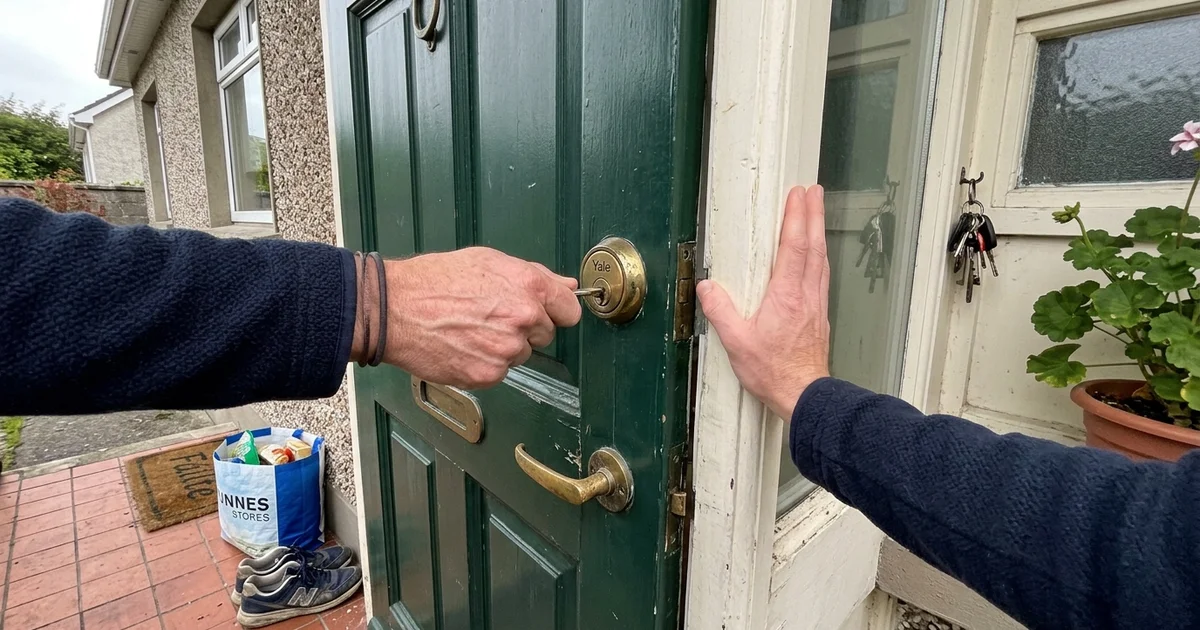
Five things that stop a key turning
A key that goes in but won’t turn is telling you something specific. Working out which of these it is saves both money and a broken key.
1. The cylinder is dry or seized
Dust, damp and years of use leave the pins and springs sluggish. Corrosion accelerates this considerably, and near the coast — Tramore, Fenor, Dunmore East, the Copper Coast villages — salt air makes it dramatically faster than a few miles inland.
How it feels: gritty and resistant from the moment the key goes in. Often worse in cold weather.
2. The key is worn
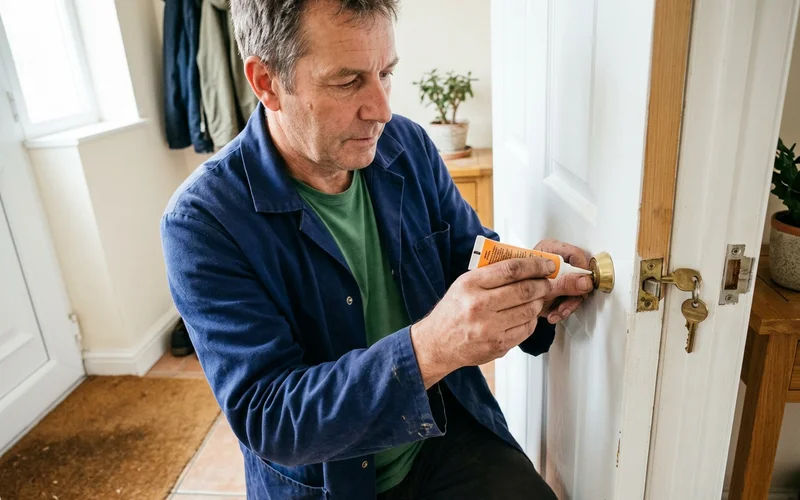
Keys wear down, especially copies cut from copies. The peaks and valleys that lift the pins to exactly the right height get rounded, and eventually one pin no longer sets.
How it feels: the key goes in fine and turns a fraction, then stops. A different key for the same lock — a spare that’s seen less use — often works.
3. The door has dropped or the frame has swollen
This is the one people misdiagnose most often, because the lock is fine and the door isn’t. When a door drops or a frame swells with damp, the bolt is under pressure inside the keep and physically cannot retract.
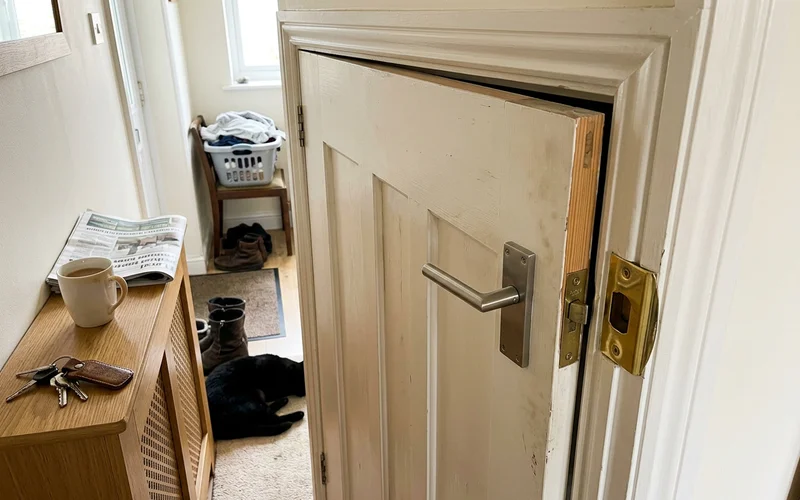
How it feels: the key turns easily if you lift or push the door, and not at all if you don’t. That test alone identifies it.
4. Something inside the mechanism has failed
On a UPVC door, the centre gearbox can fail so the key turns but nothing moves. On a mortice lock, a lever or spring can break. On any lock, the cam that connects the cylinder to the mechanism can shear.
How it feels: the key turns freely, sometimes all the way round, with no resistance and no result.
5. The wrong key, or a lock that’s been changed
It sounds obvious, but it happens: similar keys on the same ring, or a lock changed by a landlord or a previous occupant without the key being passed on.
What to try, and what not to
Do try a dry lubricant. Graphite or PTFE-based, two short bursts into the keyway, then work the key gently in and out.
Don’t use oil or general-purpose spray. It’s the most common well-meant mistake in the country. Oil attracts dust, dust becomes paste, and the lock ends up worse than it started.
Do try lifting or pushing the door while turning the key. If that works, the problem is alignment, not the lock.
Do try a different key for the same lock if you have one.
Don’t force it. A worn key in a stiff cylinder is exactly the combination that snaps. Once that happens you need an extraction as well as whatever the original problem was.
The line worth remembering
Every extra kilogram of force you apply is buying you a more expensive job. If two normal attempts don’t work, stop.
When to call
Ring a locksmith if the key won’t turn after a lubricant and a gentle try, if the key has started to bend, if you’re locked out entirely, or if the door needs lifting every time to lock it.
An emergency lockout call-out gets you in, and the diagnosis usually follows immediately: cylinder, key, alignment or mechanism. Where it’s a worn cylinder or a failing mechanism, our lock repair and replacement service covers the fix, and a repair is often possible rather than a full replacement. If you’re worried that getting in means losing the lock, whether a locksmith needs to drill your lock answers that directly.
Catching it early
A key that has started to need a wiggle is giving you weeks of notice before it strands you outside. Two dry lubricant applications a year, a fresh key cut when your original starts looking smooth, and a hinge adjustment when a door starts catching will prevent the large majority of these calls entirely.