

Take thirty seconds first
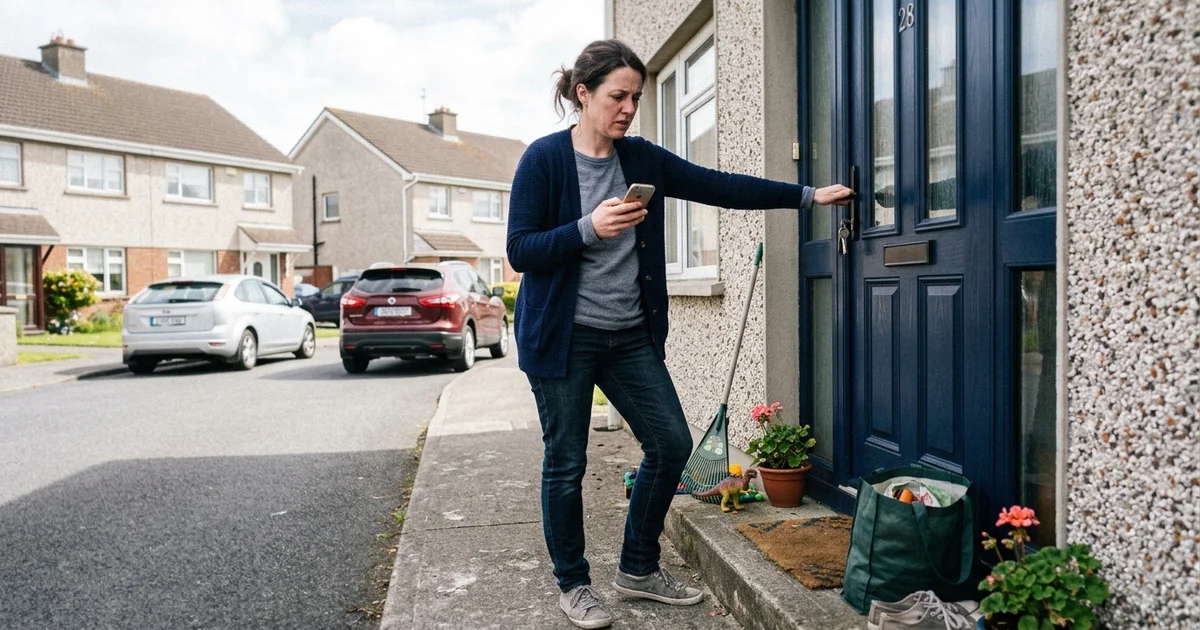
Being locked out triggers a specific kind of panic, and that panic is what causes the expensive decisions. Before doing anything, establish which situation you’re actually in.
Urgent: a child, vulnerable adult or pet is inside, something is cooking, or you’re in genuine distress from cold or weather. Ring 112 or 999 if anyone is at risk, then ring a locksmith.
Not urgent, just annoying: you’re outside, everyone is fine, and you’d like to be back in without a large bill. This is the overwhelming majority of lockouts, and it gets solved in about half an hour by an emergency lockout call-out.
The difference matters, because the second version gives you time to make good decisions rather than fast ones.
Check the safe options
Work through these in order. All are safe, and none can make things worse.
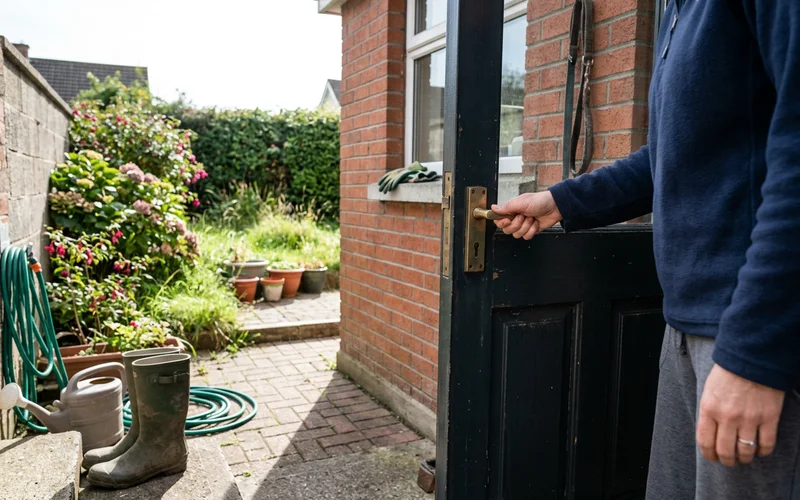
- Every other door. Back, side, garage, patio. Front doors get locked out of habit; back doors get left on the latch far more often than people expect.
- Ground-floor windows you can reach standing on the ground. If one is genuinely open and you can step through safely, do. If it needs a chair, a bin or a wall, stop.
- Anyone with a spare. A partner at work, a neighbour, a parent, a landlord or letting agent. Fifteen minutes waiting for someone with a key beats a call-out.
- Your pockets, bag and car, again. Keys reappear with remarkable frequency on the second search.
What not to do
Don’t force the key or the lock. A key snapped in the cylinder turns one job into two, and sometimes means a new lock as well.
Don’t try the credit card trick. It works on a simple spring latch and almost nothing else. On a multi-point UPVC door it achieves nothing beyond a damaged card.
Don’t lever the door or frame. Splintered timber and bent UPVC are expensive, and a damaged frame often needs realigning even after you’re inside.
Don’t break glass. You’ll pay for the glazing, the house is insecure until it’s replaced, and it’s slower than the locksmith already heading your way.
Don’t climb. People fall off walls, bins and flat roofs every year doing this. A call-out is cheaper than a broken wrist by an enormous margin.
Making the call
Have four things ready and the call takes ninety seconds:
- Your address, ideally with an Eircode.
- The door type — white plastic-looking with a lift-up handle (UPVC or composite), or timber with a traditional key (mortice or rim lock).
- Whether it’s locked or just closed. If you never lifted the handle or turned the key, only the latch is holding, which is a simpler job.
- Whether anyone is inside. This changes the priority immediately.
Then ask for a firm price including any after-hours rate. You should get one figure, agreed before anyone travels.
What happens when we arrive
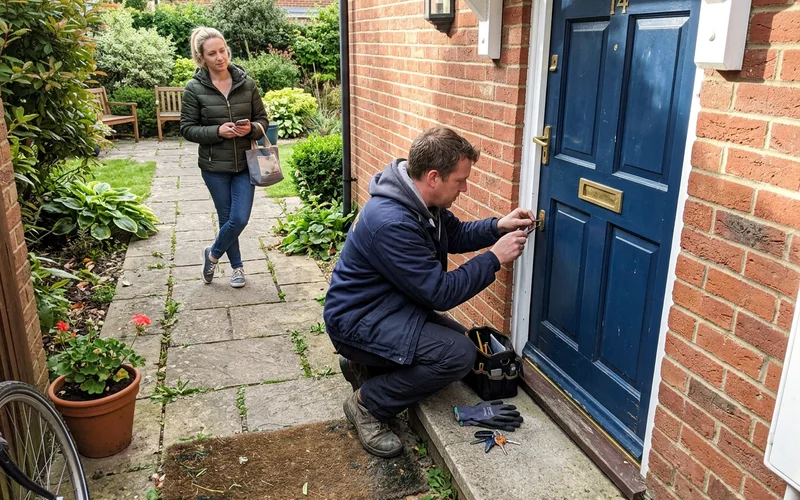
Expect an ID check first — photo identification and something linking you to the address. If your documents are inside, say so on the phone; post visible through the letterbox, a neighbour vouching for you, or details of the interior usually resolve it.
Then the opening itself. On most standard domestic doors this is non-destructive: the existing lock is picked or bypassed and continues working normally afterwards. Drilling is a last resort for seized or high-security locks, and you’d be told the situation and the replacement cost first. There’s more on that in our guide on whether a locksmith will drill your lock.
Stopping it happening again
One spare key, kept somewhere sensible, would prevent nearly every lockout we attend. A coded key safe mounted out of obvious sight beats a key under the mat, in a plant pot, or on the ledge above the door — those are the first three places anyone checks. Leaving a spare with a neighbour or family member nearby works just as well and costs nothing.