


First: you are not in an emergency, you are in an inconvenience
Being locked out feels urgent, and that feeling is what makes people do expensive things. Before anything else, take the pressure off: unless a child, a vulnerable adult or a pet is inside, or something is cooking on a hob, this is a problem that gets solved in about half an hour by someone with the right tools.
If someone vulnerable is inside, or there’s a genuine risk in the property, ring 112 or 999 first and tell them. Then ring a locksmith. Everything below assumes the ordinary version: you’re outside, your keys are inside, and you’d like to be back in without a large bill.
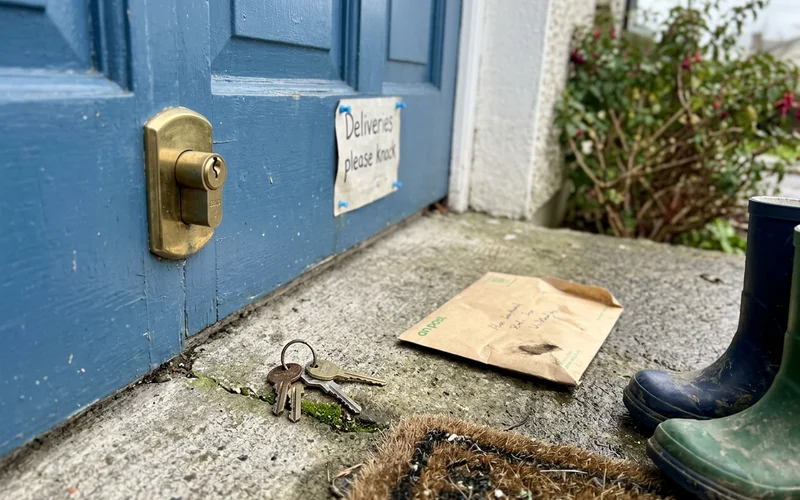
Ring for help early rather than after twenty minutes of trying things. Most Waterford lockouts are resolved with an emergency lockout call-out that leaves the existing lock working, and the sooner the van is moving, the sooner you’re inside.
Safe checks worth making
While you wait, there are a few things genuinely worth trying. All of them are safe and none of them can make the situation worse.
- Check every other door. Back doors, side doors, patio doors and the door from a garage into the house. People lock the front out of habit and leave the back on the latch far more often than they’d admit.
- Check ground-floor windows you can reach standing on the ground. If one is genuinely open and you can step through safely, do. If it involves climbing, a chair, a wall or a flat roof, don’t.
- Think about who else has a key. A partner at work, a neighbour who minds the cat, a parent, a landlord or letting agent. A ten-minute drive from someone with a spare beats a call-out fee.
- Check the car, coat pockets and bags again. Keys turn up in the same three places with remarkable frequency.
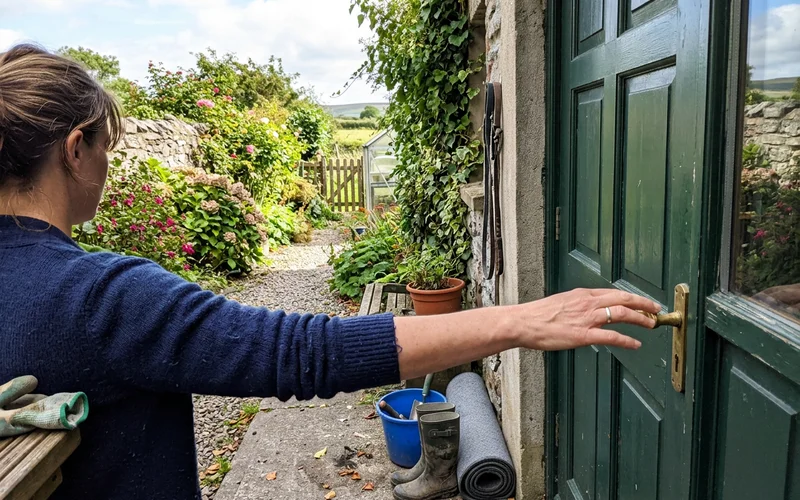
What not to do
This is the part that costs people money.
Don’t force the lock. Twisting a key hard enough to snap it converts a lockout into a lockout plus a key extraction plus, sometimes, a new cylinder.
Don’t try the credit card trick. It works on a simple spring latch and on almost nothing else in modern Irish housing. On a multi-point UPVC door it does nothing except damage the card and, occasionally, the door seal.
Don’t lever the door or the frame. Splintered timber and bent UPVC are expensive, and a damaged frame often means the door needs realigning even after you’re back inside.
Don’t break a window. It’s the most expensive way into your own home, it leaves you with glazing to replace and a house that isn’t secure until it’s done, and it’s slower than a locksmith who’s already on the way.
Don’t climb anything. Every year people fall off walls, bins and flat roofs trying to reach a window. A call-out costs far less than a broken wrist.
The rule of thumb
If it involves force, height or breakage, it’s the wrong move. A locksmith opening the door properly is almost always cheaper than the damage caused by the alternative.
What to have ready
Photo identification. A driving licence or passport.
Something linking you to the address. A utility bill, bank letter, tenancy agreement or mortgage document. If your only proof is inside, that’s usually workable — post visible through the letterbox with your name on it, a neighbour who can vouch for you, or details of the property you’d only know if you lived there. A responsible locksmith checks entitlement before opening any door, and it’s a safeguard that protects you as much as anyone. That process is explained in more detail in our guide on why locksmiths verify proof of address.
A charged phone, so we can ring you when we’re outside.
A way to pay once the price is agreed and the work is done.
What to expect when we arrive
Somewhere between 20 and 40 minutes for most Waterford addresses, depending on where you are. The locksmith confirms your ID, then opens the door using the least invasive method available — usually non-destructive entry, which means picking or bypassing the existing lock rather than drilling it.
In most cases your lock still works afterwards and there’s nothing to replace. If the cylinder is seized or high-security and can’t be opened non-destructively, you’ll be told that, and told what a replacement costs, before anything is drilled.
The price you were given on the phone is the price you pay. If you weren’t given one, that’s worth noting for next time.