

The short definition
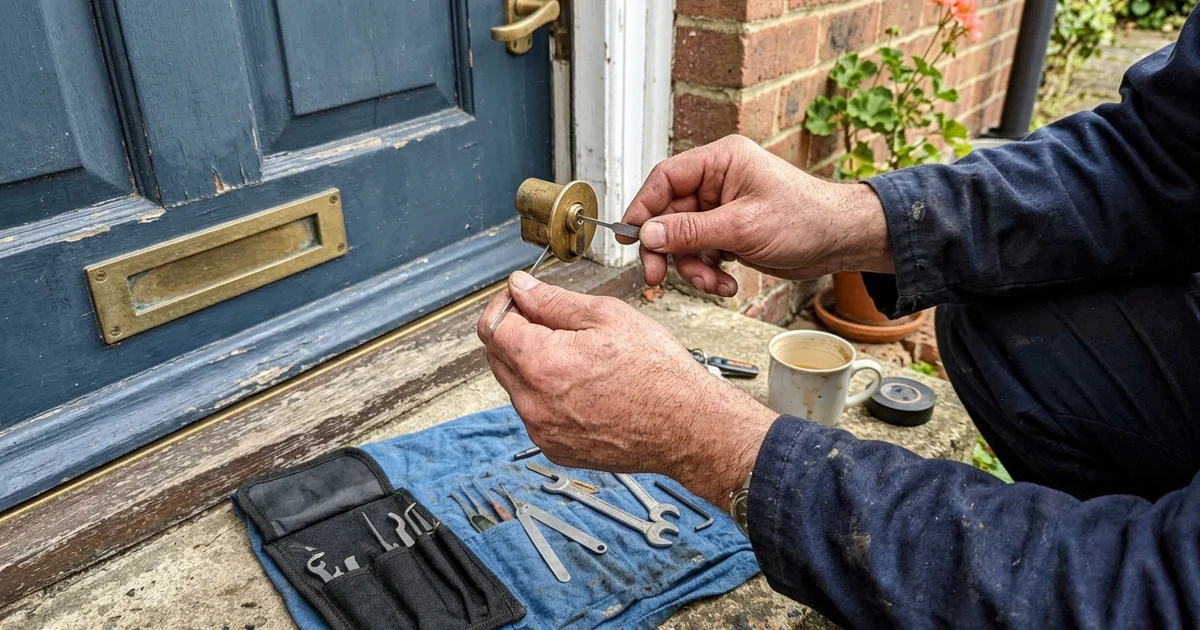
Non-destructive entry means opening a locked door without damaging the lock, the door or the frame. Instead of cutting through the mechanism, the locksmith manipulates it — persuading it to operate exactly as it would if the correct key were in it.
The practical consequence is the one that matters to you: when the door opens, your existing lock still works. There’s nothing to replace, nothing to pay for beyond the visit, and no repair to the door afterwards.
This is the default approach on every lockout we attend across Waterford, and it’s the main reason an emergency lockout call-out usually costs far less than people fear. For the actual numbers behind that, see what the average locksmith call-out charge covers.
How it actually works
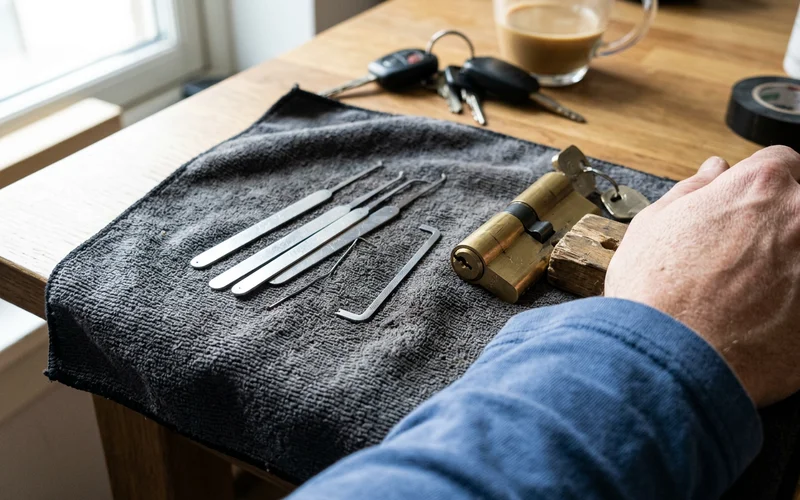
A pin tumbler lock — which covers the euro cylinders on nearly every UPVC and composite door in Ireland — works on a simple principle. A row of spring-loaded pins sits across the plug. The correct key lifts each pin to exactly the right height, at which point the plug is free to rotate and the lock opens.
Picking does the same thing without the key. Light rotational pressure is applied to the plug with a tension tool, and the pins are set one at a time with a pick. When the last pin sets, the plug turns. From the lock’s point of view, nothing unusual has happened.
Bypassing skips the pins altogether by operating the mechanism directly. A latch can sometimes be slipped with a thin tool, a letterbox can allow a handle to be reached with a proper tool, and some multi-point mechanisms can be operated from the edge of the door. Which method suits depends entirely on the door.
Air wedges create a small, controlled gap that lets a slim tool reach an internal handle or thumbturn. This is the standard approach on vehicles, where the aim is to protect paintwork and door seals.
Every one of these leaves the mechanism intact. That’s the whole point.
When drilling is genuinely unavoidable
Honesty matters here, because “we never drill” would be a sales claim rather than a fact. Four situations do defeat non-destructive methods:
A seized cylinder. Corrosion has locked the internals solid. Common on coastal doors around Tramore, Fenor and the Copper Coast where salt air accelerates the process. Nothing will turn, key or pick.
High-security locks with anti-pick protection. Mushroom and spool pins, sidebars and other features are designed specifically to defeat picking. That’s what you paid for when you bought them, and it works on locksmiths too.
Damage from a failed break-in. A cylinder that’s been partially snapped or a mechanism that’s been forced may be physically deformed inside.
Certain lock types and door configurations where no bypass route exists and the pinning defeats reasonable time on site.
In those cases a competent locksmith stops, explains the situation, tells you what a replacement lock costs, and only then proceeds. You should never learn that your lock is being destroyed by hearing the drill start. There’s more detail on this in our guide on when a lock has to be drilled.
What it means for your bill
| Approach | What you pay for | Typical outcome |
|---|---|---|
| Non-destructive entry | The call-out only | Original lock still working |
| Drilling | Call-out, new lock, fitting | Lock replaced, door possibly marked |
That table is the entire argument. A drilled cylinder is scrap metal, so the cost of the visit is joined by hardware and labour to fit it. On a standard domestic door that difference is usually somewhere between €50 and €120.
It also explains a piece of industry behaviour worth knowing about. Drilling takes about ninety seconds; picking might take twenty minutes. An operator paid per job, working at volume, has an incentive to drill. A locksmith who values repeat custom and local reputation does not.
Why it protects the door as well as the lock
Non-destructive methods also avoid the collateral damage that comes with force. Levering a door marks the frame. Drilling can scar the handle plate and, on older timber doors, split the surrounding wood. Breaking glazing to reach a handle creates a security problem that lasts until a glazier arrives.
On period doors — the terraces around Portlaw, Passage East and the older parts of Waterford City — this matters more again, because matching original timber and ironmongery is expensive and slow. Picking a lock on a hundred-year-old door leaves nothing behind. Drilling it can start a much larger job.
What to ask when you ring
One question does most of the work: “Will you try to open it without drilling?”
A locksmith who says yes, and explains that drilling is a last resort they’d talk you through first, is telling you how they work. A locksmith who treats drilling as routine is telling you something too.