

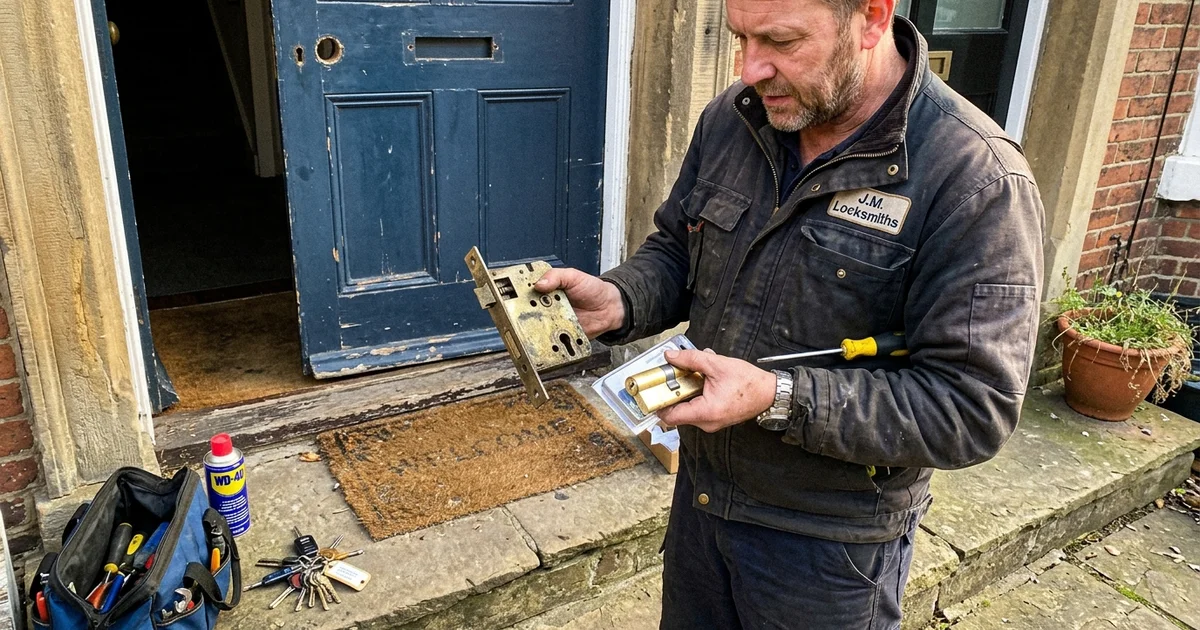
The question behind the question
“Repair or replace” is really three questions in one: what’s actually wrong, how much life is left in the lock, and does the current lock still meet your security needs?
Work through those three and the answer usually becomes obvious.
When repair is the right call
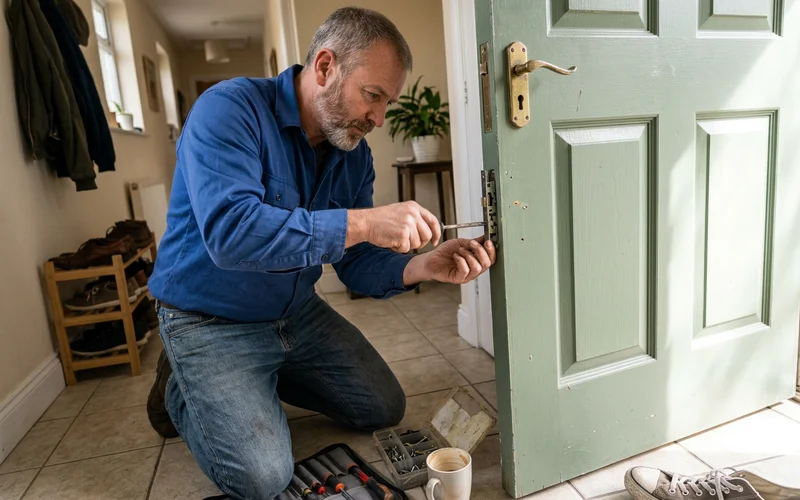
The lock is dry or dirty. Stiffness from grit and lack of lubrication is a service job, not a replacement.
The door has dropped or the frame has moved. The lock is fine and the alignment isn’t. Adjusting hinges, keeps and the strike plate fixes it, and fitting a new lock into a misaligned door would just break the new one.
A single component has failed on a good-quality lock. A cylinder can be replaced without changing an entire multi-point mechanism. A handle can be replaced without touching the lock.
The lock is modern and meets current standards. No security reason to change it.
Typical repair cost: €80 to €130, and our lock repair and replacement service always looks at repair first. If you’re still working out whether yours has reached that point, the signs a door lock needs repair or replacing lists what to check.
When replacement is the right call
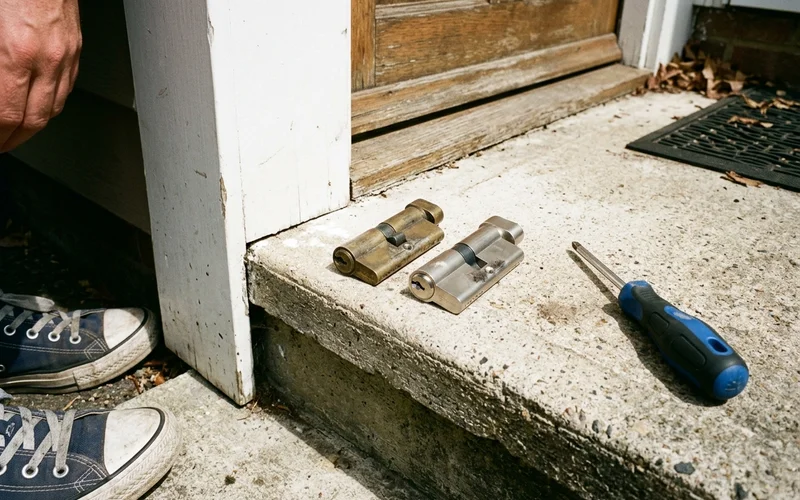
The mechanism is worn out internally. Pins, springs and levers wear. Once the internals are past it, no amount of lubricant or adjustment helps, and repairing simply delays a replacement you’ll pay for anyway.
The lock is below the standard you need. If your cylinder protrudes past the handle plate and could be snapped in seconds, or your insurer’s wording references a standard your lock doesn’t meet, replacement solves a real problem rather than a nuisance.
The key history is unknown. After moving house, a tenancy change, or a lost key, the issue isn’t lock condition at all — it’s who else has a key. Re-keying or replacing resets that.
Repair keeps recurring. If you’ve had the same lock adjusted twice in a year, the third adjustment is money after money.
Typical replacement cost: €100 to €200 including hardware and fitting.
The maths people miss
Here’s the part that changes the decision more often than anything else.
| Repair now | Replace now | |
|---|---|---|
| Labour | Paid once | Paid once |
| Hardware | None | €30–€80 |
| If the lock fails in 18 months | Labour again + hardware | — |
Because labour is the larger share of both figures, replacing a genuinely tired lock now is often cheaper over three years than repairing it and replacing it later. Conversely, replacing a perfectly good lock because it needed lubricant is money wasted.
The honest version is: repair what’s fixable, replace what’s finished.
The upgrade opportunity
If replacement is the answer, it’s also the cheapest moment you’ll ever have to improve your security. The locksmith is already there and the labour is already being paid. Moving from a basic cylinder to an anti-snap, anti-pick, anti-drill one — or from a non-standard mortice to a British Standard BS 3621 — usually costs only the hardware difference.
This is worth considering alongside your policy wording. Many Irish insurers reference lock standards, and our guide on insurance lock requirements in Ireland explains what to look for.
How to get an honest answer
Ask the locksmith to tell you what’s actually wrong before quoting. A diagnosis that starts and ends with “it needs replacing”, with no explanation of what failed, is worth a second opinion.
Our approach is to diagnose first, tell you plainly whether a repair will hold, and give you the price for both options where both are viable. Sometimes the right answer costs us the bigger job, and that’s fine.