

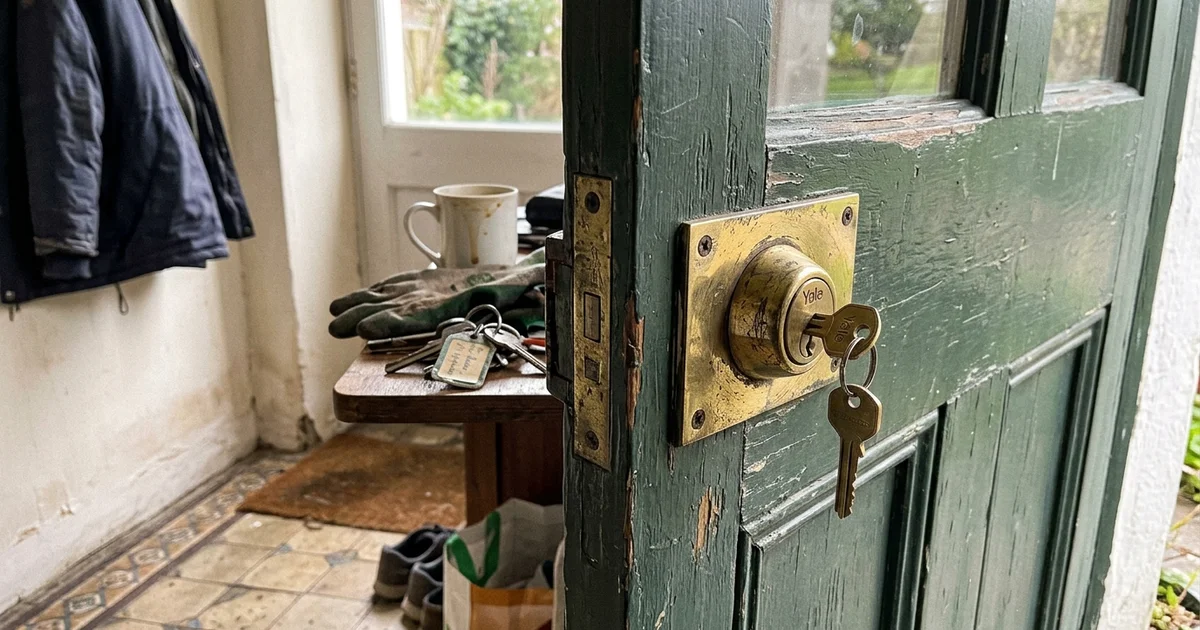
Locks give you warning
Very few locks fail without notice. They get stiff, they get loose, they start needing a particular knack — and then one day they strand someone outside. The warning period is usually weeks or months, which is plenty of time to deal with it in daylight at a daytime price.
Here’s what to watch for.
1. The key sticks or needs a wiggle
The most common early sign. Grit, corrosion or wear inside the cylinder means the pins aren’t setting cleanly.
If a dry graphite lubricant fixes it for months, it was dirt. If it fixes it for a fortnight, something is wearing out.
2. The cylinder is loose in the door
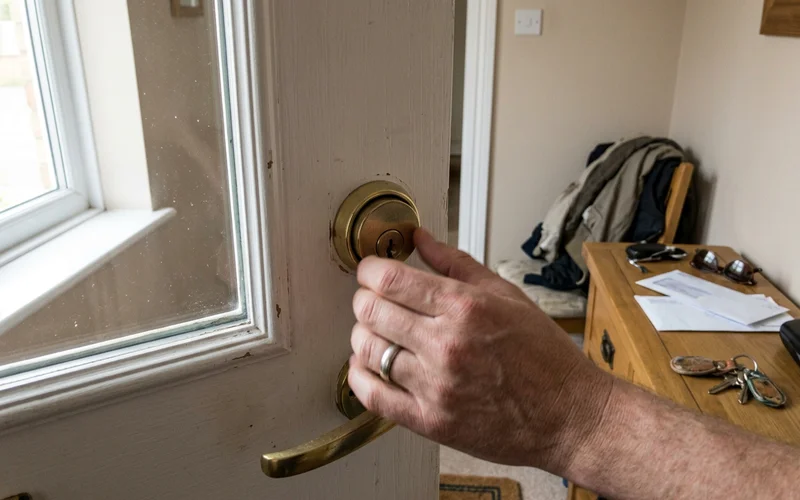
Grip the cylinder and try to move it. It should be solid. If it rocks or rotates slightly, the retaining screw has loosened or the fixing has worn.
This one matters for two reasons. Movement accelerates wear on the cam, and a cylinder with play in it is significantly easier to attack. Worth fixing immediately, and it’s often just a screw.
3. The key turns but nothing happens
The key rotates, sometimes all the way round, with no resistance and no bolt movement. Something between the cylinder and the mechanism has failed — a sheared cam, a broken lever, or on a UPVC door a failed centre gearbox.
At this point the door is either stuck open or stuck locked, and it’s a call rather than a watch-and-wait.
4. The key looks worn

Compare your everyday key with a spare that’s seen less use. If the peaks look rounded and the profile shallow, the key is the problem, not the lock. A worn key in a tightening cylinder is exactly the combination that snaps.
Cutting fresh to the lock’s original pattern usually restores normal operation. Copying the worn key just copies the wear.
5. The door needs a lift, a pull or a shove
The lock may be fine. A door that has dropped or a frame that has swollen puts the bolt under load so it can’t retract or extend cleanly.
Simple test: does it lock easily when you lift or push the door? If yes, it’s alignment, and adjusting hinges and keeps usually solves it without touching the lock at all.
6. The lock is below current security standards
Not a fault, but worth knowing. If your cylinder protrudes more than a couple of millimetres past the handle plate, it’s snappable. If your insurer’s wording references BS 3621 or IS EN 1303 and your locks predate those, there may be a mismatch worth resolving before you ever need to claim.
What to do about it
Small things first: a dry graphite lubricant twice a year, a tightened cylinder screw, a fresh key cut when your original starts looking smooth. Those three prevent a surprising proportion of call-outs.
When something is beyond that, our lock repair and replacement service covers the diagnosis and the fix. We repair where the lock is sound and only recommend replacement when it genuinely is the better answer — and if you’re weighing that decision up, our guide on repairing versus replacing a failing lock walks through the trade-offs.
The rule of thumb
Anything that needs force, twice, is telling you something. Deal with it while it’s an inconvenience rather than waiting until it’s a lockout.