

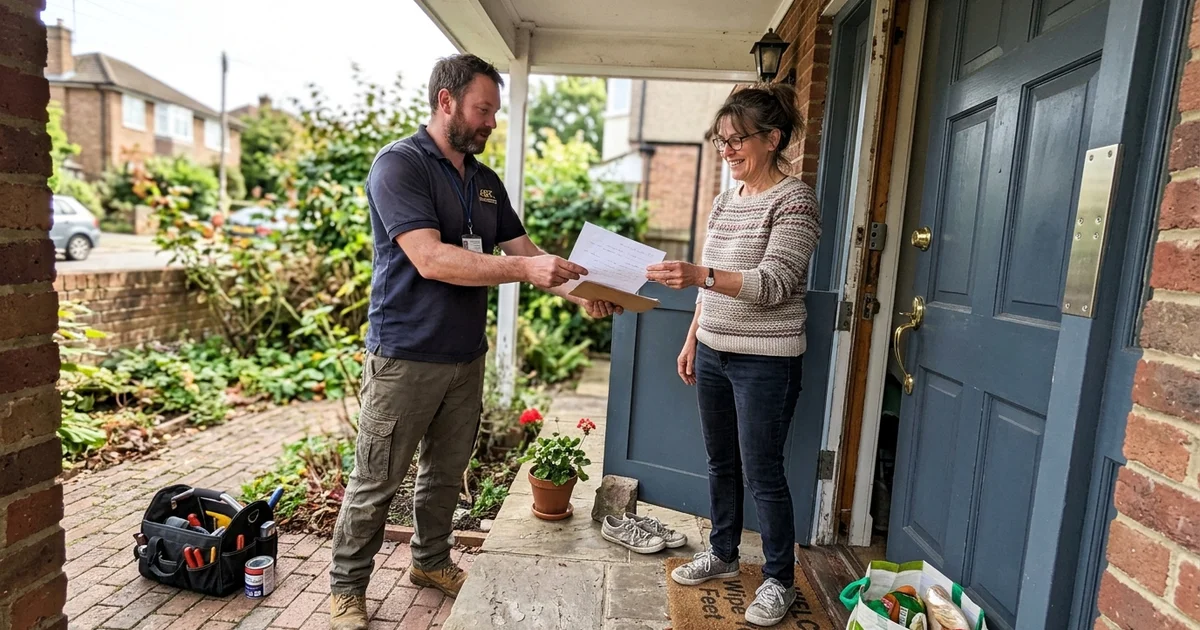
What a claim usually needs
Insurance claims after a burglary tend to hinge on three pieces of evidence.
A Garda report number. Obtained when you report the break-in. Without it, most policies won’t proceed.
Evidence of the damage and loss. Photographs of the entry point, the damaged lock or frame, and the affected rooms — taken before anything is repaired or tidied.
Evidence the property was properly re-secured. Receipts for the work, plus a written record of what was fitted and to what standard.
The third one is the piece people most often don’t think to ask for at the time, and the one that’s hardest to reconstruct later. It’s why our burglary and break-in lock repair work always comes with a written record of what was fitted.
Standards insurers reference
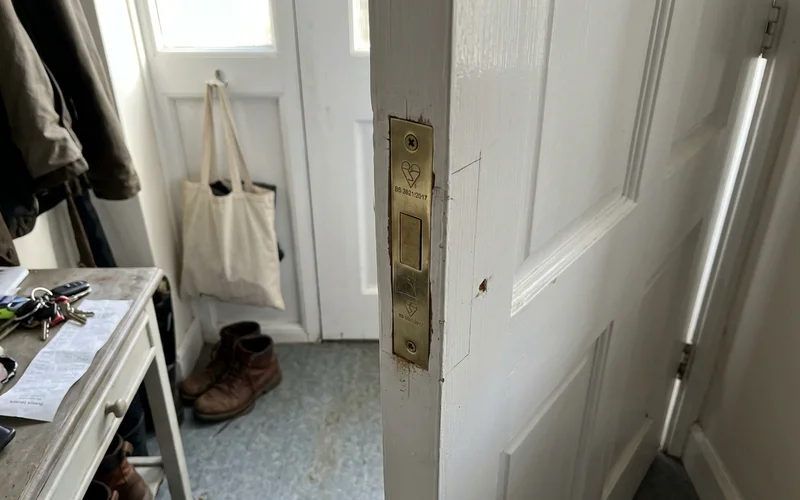
Most Irish home policies with a security condition reference one or both of:
- BS 3621 — a British Standard for thief-resistant mortice locks, usually applied to timber final exit doors.
- IS EN 1303 — a standard covering cylinder performance, relevant to UPVC and composite doors.
Some policies also refer to key-operated window locks, or specify anti-snap protection on euro cylinders.
Wording varies, so the only authoritative source is your own document. Our guide to Irish home insurance lock requirements explains how to find and read the relevant section.
Repairing to a standard, not just to working
After forced entry, there’s an important distinction between making a door work again and making it compliant.
A door can close and lock while still having:
- a frame repaired but not reinforced;
- a strike plate fixed with short screws into damaged timber;
- a replacement cylinder that meets no particular standard.
That’s a functioning door and a potential problem at claim time. Repairing to a standard means the hardware is rated, the fixings reach solid material, and the work is documented.
Our burglary and break-in repair service is built around that, precisely because the insurance question comes up on nearly every job. Where a door or window was physically destroyed, emergency boarding-up and door reinforcement covers the overnight stage that comes before any of this paperwork.
What to keep
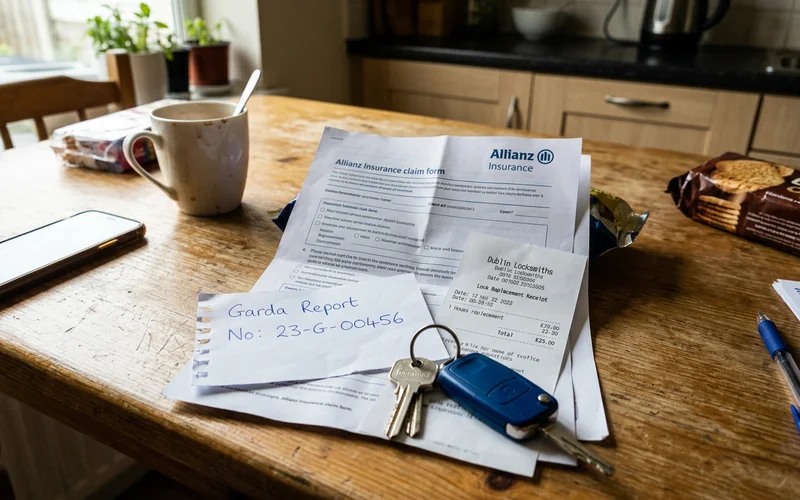
Assemble one bundle and keep it together:
- The Garda report number and the date reported.
- Photographs of all damage, taken before repair.
- Our written record of work — doors, hardware, standards, date.
- Receipts for the locksmith work and any glazing or joinery.
- A note of anything temporary, such as boarding-up, and when the permanent repair followed.
- Your policy wording, so you can point to the condition being satisfied.
Practical advice on the claim itself
Tell your insurer early. Most policies require prompt notification. Ringing them before the repair, even briefly, avoids arguments about whether they were informed.
Ask whether they need to inspect. Some insurers want to see damage before it’s repaired. If your property can be secured temporarily — boarded rather than fully repaired — that can satisfy both requirements.
Don’t over-repair before agreeing. Secure the property, absolutely. But hold off on optional upgrades until you know what the claim covers, unless you’re happy to fund them yourself.
Keep the old hardware if it’s a claim item. A snapped cylinder is evidence.
What we do
We repair and re-secure to recognised standards, provide a written record of exactly what was fitted, and are happy to talk to your insurer or loss assessor if they need clarification on the work.
We won’t tell you your claim depends on a particular upgrade in order to sell it. If your existing hardware already met the standard and only the frame was damaged, we’ll repair the frame and say so.