

The problem these systems solve
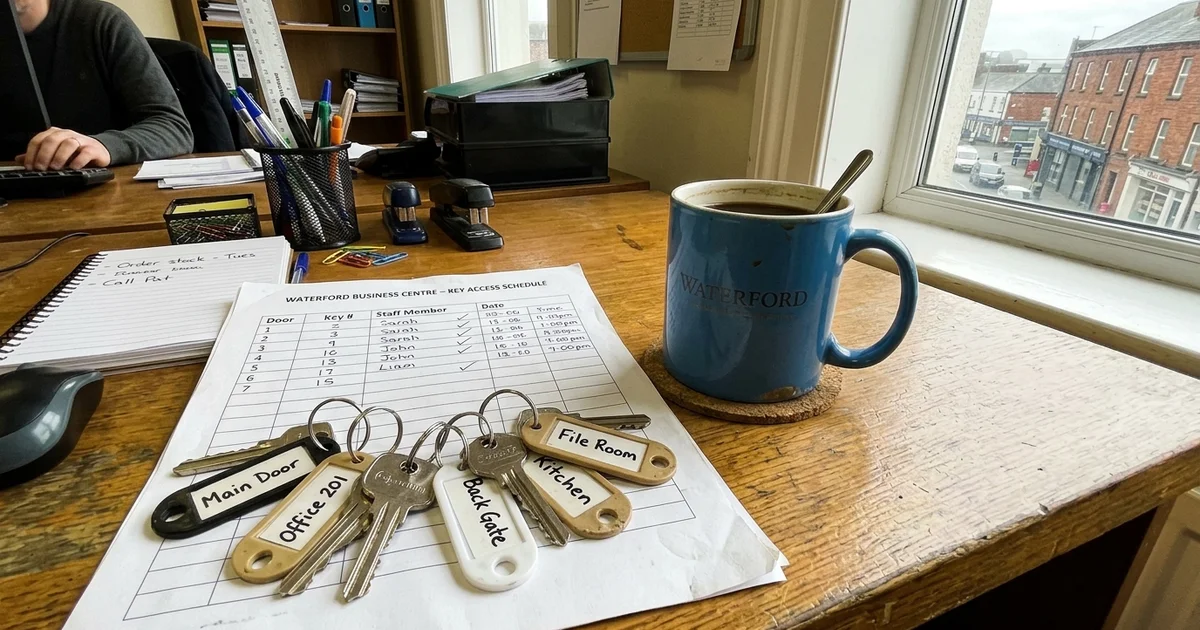
Most premises accumulate keys the same way. A key for the front, another for the back, one for the store, one for the office, one for the meter cupboard. Staff join and leave. Contractors are given a key “for the week”. Nobody keeps a list.
Two years later, nobody can answer a basic question: how many keys to this building exist, and who has them?
Master and keyed-alike systems fix both the practical annoyance and the control problem, and they’re a core part of our commercial locksmith work across Waterford. Where a suite covers escape routes, plan it alongside fire-exit and panic hardware compliance so keyed control never blocks a means of escape.
The three options
Keyed-alike
Several locks all accept the same key.
Best for: small premises where everyone needs access to everything. A shop with a front door, a back door and a stockroom. A house with front, back and garage doors.
Advantages: cheapest, simplest, one key per person.
Limitation: no access control. Anyone with a key has everything.
Master suite
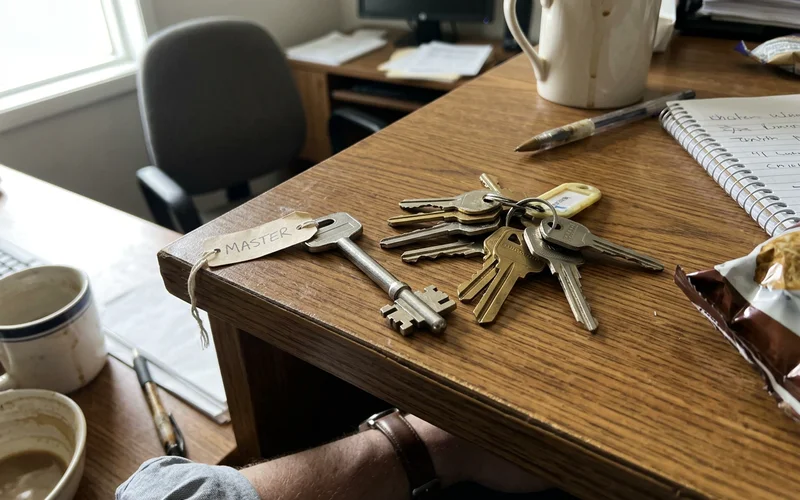
Tiered access. Each lock has its own key; a master key opens all of them. Larger systems add sub-masters — a floor manager’s key opening everything on one floor, for instance.
Best for: offices with private rooms, retail with stockrooms and back offices, buildings in multiple occupation, landlords with several units.
Advantages: genuine control over who goes where, without anyone carrying a bunch of keys.
Limitation: needs planning, and costs more than keyed-alike.
Restricted keyways
Not an alternative to the above but a layer over either. The key blanks are patent-protected, so copies can only be cut by authorised suppliers with your written authorisation.
Best for: anywhere the real risk is uncontrolled duplication — rental property, businesses with staff turnover, shared premises.
Planning a suite properly
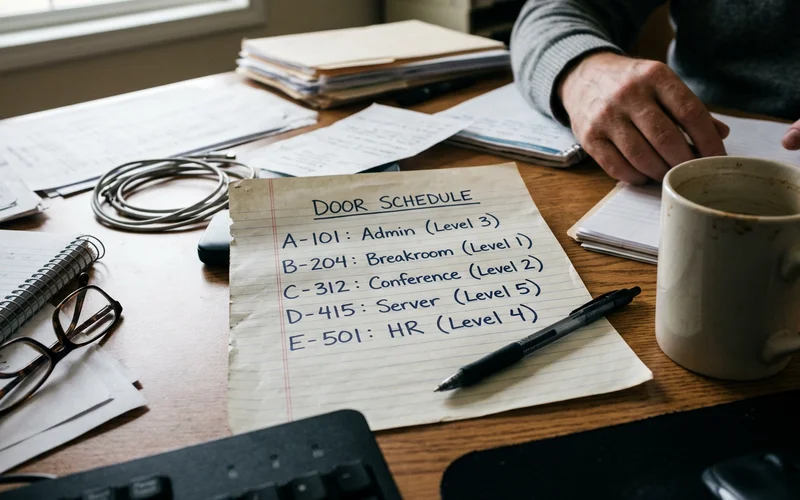
A master suite is a design job before it’s a fitting job. The planning takes an hour and it’s what makes the difference between a system that helps and one that gets worked around within a month.
1. List every door. Including the ones people forget: meter cupboards, bin stores, roof access, external gates.
2. List every role, not every person. “Cleaner”, “shift manager”, “owner”, “maintenance”. Roles outlast individuals.
3. Map roles to doors. Which role needs which door, and be honest about it — access levels that don’t match how people actually work get defeated by propped doors and lent keys.
4. Decide the master levels. One master for everything is usually enough for a small premises. Larger sites benefit from sub-masters by area or function.
5. Build in room to grow. A suite designed with spare capacity can absorb new doors later. One designed to exactly fit today can’t.
6. Keep a key register. Who holds which key, issued when, returned when. This is the part that makes the system worth having a year later.
What it costs
Keyed-alike sets for a small premises typically start around €220 to €400 depending on the number of doors. Master suites are priced on the door count and the complexity of the hierarchy, following a site visit.
Restricted keyways carry a premium on the hardware and on each key cut, which is the mechanism by which duplication stays controlled.
For landlords
Master suites are particularly useful for multi-unit property. Tenants get keys to their own unit only; you hold a master for the whole building and common areas.
Two practical notes: keep the key register current at every changeover, and remember that holding a master doesn’t change your obligations around notice and a tenant’s right to quiet enjoyment. The key is for emergencies and agreed access, not convenience.
For individual spare keys and everyday cutting alongside a suite, see our key cutting service.