

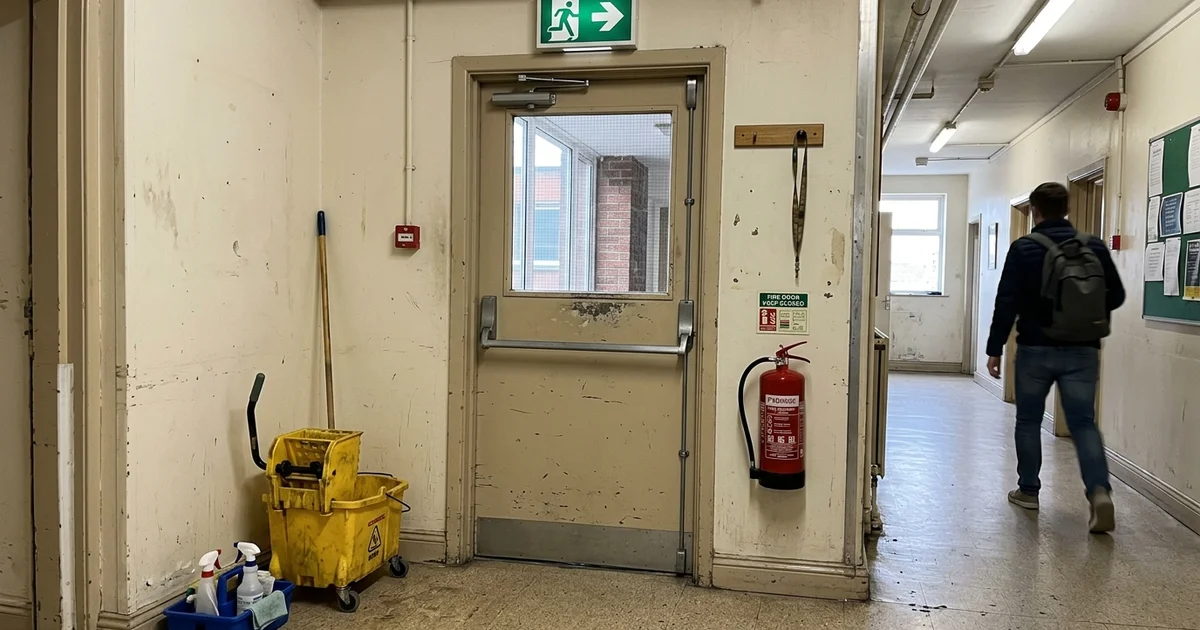
You know how complicated building compliance feels when safety regulations keep tightening.
Our team sees this confusion every day, especially regarding panic bar fire exit compliance following the 2025 Building Control Regulations updates. It is a daily challenge for property managers across Ireland.
This work sits alongside our wider commercial locksmith services for Waterford businesses.
The rules around emergency exits leave absolutely zero room for guesswork. Let’s break down the specific standards, examine common compliance failures, and outline how to correctly secure your premises.
Why exit hardware is different from every other lock
Exit hardware prioritises immediate, unhindered escape over keeping intruders out. This is why it uses distinct push mechanisms instead of traditional keys. Every other lock on a building exists to keep people out, but exit hardware exists to let people out instantly, in the dark, and without a key.
That reversal is exactly why these devices have their own strict standards. You cannot treat this as ordinary locksmith work. A fire exit that secures a building against intruders but proves slow to open in an emergency has failed at the only job that matters.
Our installers take this legal duty seriously under the Fire Services Act 1981 and 2003. This legislation places the responsibility squarely on the building owner or occupier to guarantee safe evacuation routes. Failing to comply can result in severe penalties from local fire authorities.
EN 179 versus EN 1125
The choice between these two European standards comes down to who uses your building and whether they are trained on its layout. You must fit the correct device to comply with Irish building regulations, particularly Technical Guidance Document (TGD) Part B. The distinction is entirely about the occupants.
EN 179 Emergency Exit Devices
For premises where occupants are familiar with the building and unlikely to panic in numbers, this standard applies. Users typically operate these mechanisms via a lever handle or a push pad.
Offices, small private workplaces, and staff-only areas usually fall into this category. The Health and Safety Authority (HSA) accepts an EN 179 emergency exit for non-public environments because the risk of a crush is minimal.
EN 1125 Panic Exit Devices
For public or higher-occupancy areas where people may not know the layout, an EN 1125 panic bar is mandatory. These situations involve crowds moving quickly, making horizontal push bars essential.
The bar works instantly when a body presses against it, requiring no prior knowledge of how the door operates. Retail spaces, hospitality venues, schools, and any space hosting more than 50 people require this specific hardware.
| Feature | EN 179 Standard | EN 1125 Standard |
|---|---|---|
| User Familiarity | Trained staff members | General public crowds |
| Hardware Mechanism | Push pad or lever handle | Horizontal push bar |
| Typical Environment | Private offices and backrooms | Retail stores, schools, venues |
The practical rule of thumb is quite simple. If members of the public use the door, you are highly likely in EN 1125 territory. Staff-only doors where employees know the building might only require an EN 179 setup.
Who decides what your building needs
Your local fire authority and building control department determine your requirements based on your official documentation. We fit and advise on hardware, but we do not dictate the fire safety requirements of your building. Any locksmith who tells you otherwise is overstepping their professional boundaries.
What governs your compliance:
- Your fire safety certificate (FSC) and the approved design it was granted on.
- The building’s use classification and occupancy numbers.
- Specific guidance from your local fire officer.
- Your fire risk assessment, which you must keep current.
The Building Control (Amendment) Regulations 2025 expanded FSC requirements in Ireland, meaning material alterations to industrial or storage buildings now trigger tighter scrutiny. You should bring these updated documents to the conversation. Our team will review them to tell you exactly what hardware satisfies the specified standards and fit it correctly.
Common failures we find
The most frequent compliance failures involve physical obstructions, unauthorised padlocks, and poorly maintained mechanisms that seize up when pushed. Inspectors from the HSA routinely penalise businesses for these exact infractions.

Physical and Mechanical Obstructions
A padlock or bolt added to a fire exit. Managers usually do this after a break-in or theft, and the reaction is completely understandable. It is also the most serious failure on this list, breaching the Safety, Health and Welfare at Work Act 2005. You need to solve security fears with proper hardware like alarmed exit devices rather than a heavy chain.
Hardware that has seized. Exit devices are used rarely and neglected accordingly. A push bar that needs a hard shove will fail when it counts most.
Contextual Hardware Failures
The wrong standard fitted. Finding a lever-operated EN 179 device on a public-facing door in a busy retail unit is a common, dangerous mistake.
Blocked exits. Stock, bins, and daily deliveries stacked against a fire exit defeat any certified device ever made. This is not a hardware fault, but it remains a critical failure.
Doors that have dropped. A misaligned door binds in the frame and will not swing freely, even when the panic device releases properly.
Maintenance
Fire exit hardware requires documented physical testing at least every six months to ensure mechanisms move freely and doors open without binding. Maintaining panic bar fire exit compliance demands this periodic checking, and the process is quite quick.
Current guidelines under BS 8214 advise that responsible persons inspect fire doors and their hardware bi-annually. Our technicians recommend keeping a dedicated logbook on-site for this exact purpose. Documenting these inspections proves your legal compliance if an HSA inspector or local fire officer requests evidence.
Quick Maintenance Checklist
Follow these steps during your inspections:
- Operate every device and confirm it releases on a single action.
- Check the door swings fully clear and closes properly into the frame.
- Verify nothing is stored against the exit, inside or out.
- Ensure all mandatory escape signage is present and illuminated.
- Lubricate the internal mechanisms and adjust the hinges where needed.
Recording those simple checks is definitely worth doing. A detailed maintenance log is a far better answer than a verbal assurance during a surprise inspection.
Retrofitting
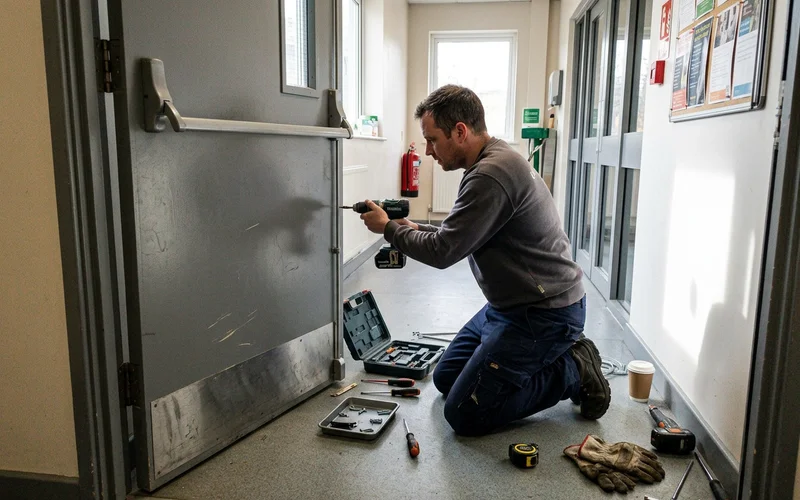
You can upgrade non-compliant hardware on existing commercial doors without replacing the entire door frame. Most commercial units can be brought up to standard easily.
Assessing Your Existing Setup
We assess the door type, the frame integrity, the direction of swing, and how the staff actually uses the door. Following that review, a compliant device suited to those specific conditions is installed.
Modern hardware can often fit into the footprint of older, non-compliant locks. This simple approach saves you significant renovation costs while ensuring full legal compliance.
Balancing Security and Safety
Where a door also needs to be secure against intruders, a common tension arises on rear exits. The correct answer is always alarmed exit hardware or access control on the inbound side, never a padlock.
Modern electromagnetic locks can integrate with your fire alarm to drop power instantly during an emergency. Access control options are covered as part of our commercial work, alongside master key systems.
To finalise your panic bar fire exit compliance, always prioritise professional guidance over guesswork. Contact our team today to schedule an inspection of your premises. We will help you secure your building safely and legally.