

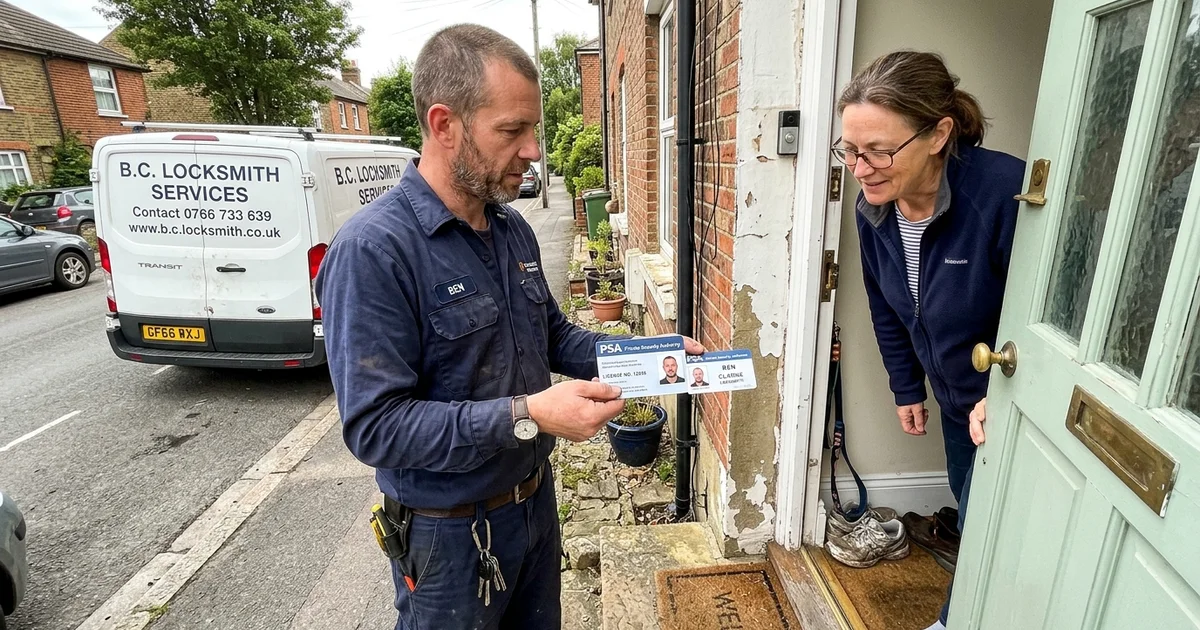
Why choosing well matters more here than in most trades
Most trades you can research at leisure. Locksmiths are usually chosen in a hurry, in the cold, on a phone with 12% battery, from whichever search result appears first. That pressure is precisely what makes the industry’s worst practices viable.
The good news is that the checks worth doing take about ninety seconds and can be done while the phone is ringing. This guide sets out what to look for, in the order it actually matters.
1. A local number, answered by a locksmith
The single most useful signal is who answers the phone. When you ring a genuinely local operator — for example our own emergency lockout service on a 051 Waterford number — you’re speaking to the person who will arrive, or someone who knows exactly where they are.
Ring a national 1800 line and you’re speaking to a dispatcher. They take your details, then find a sub-contractor near you. You don’t know who’s coming, the operator can’t accurately tell you how long they’ll be, and if something goes wrong afterwards, responsibility sits somewhere between two companies.
Quick test: ask “how long from where you are now?” A local locksmith answers with a real number based on where their van is. A call centre answers with a range.
2. A PSA licence and insurance
Locksmithing is a licensed activity in Ireland, regulated by the Private Security Authority. A licence means vetting and accountability, and it’s a condition of trading legally.
Ask two questions: are you PSA-licensed, and are you insured? Both should get an immediate yes and an offer to show credentials at the door. Any hesitation, deflection or “we’re all fully certified” without specifics is worth acting on — there are plenty of other numbers to ring.
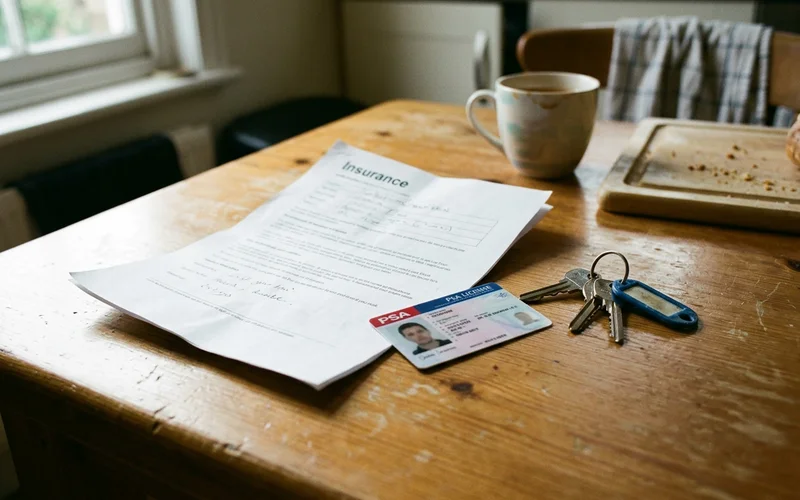
Insurance matters for a practical reason. If a locksmith damages your door, frame or vehicle, an insured operator’s cover pays for it. An uninsured one relies on their own willingness to make it right.
3. A firm price before anyone travels
You should be able to describe a job on the phone and get a figure. Not a range so wide it’s meaningless, and not “we’ll see when we get there”.
Ask specifically:
- Does that price include the call-out?
- Is there an after-hours or weekend surcharge, and what is it?
- Does it include parts if a lock needs replacing?
- Is VAT included in the figure?
The pattern to avoid is a low headline price that grows once the work is done. If a quote is dramatically below everyone else’s, ask what’s excluded. Our guide on what a fair price covers goes through this in more detail.
4. Non-destructive entry as the default
Ask: “will you try to open it without drilling?”
The honest answer is that most standard domestic locks can be opened non-destructively, and a competent locksmith will try that first. Drilling is faster for the locksmith and much more expensive for you, because a drilled cylinder is scrap and you’re paying for a replacement plus fitting.
A locksmith who talks about drilling as the default, or who arrives and reaches straight for a drill without explanation, is optimising for their time rather than your bill.
5. Real reviews and a real identity
Look for reviews that mention specific places, specific jobs and specific people. Generic five-star reviews with no detail, all posted in the same fortnight, tell you very little.
Also look for a named operator, a physical service area described in real terms, and a website that talks about actual towns rather than “nationwide coverage”. A business rooted in a place tends to describe that place accurately.
6. Expect to prove the property is yours
This one runs the other way: a locksmith who doesn’t check your entitlement to enter is a red flag, not a convenience. Anyone willing to open your door without asking questions will open your neighbour’s the same way.
Expect to show photo ID and something linking you to the address. It takes a minute and it’s explained fully in our guide on proof of address checks.
The 90-second checklist
| Question to ask | Good answer |
|---|---|
| Where are you coming from? | A named local area and a realistic time |
| Are you PSA-licensed and insured? | Yes, immediately, with an offer to show it |
| What will this cost, all in? | One figure, including call-out and any surcharge |
| Will you try to open it without drilling? | Yes, non-destructive entry first |
| Will you need ID from me? | Yes, photo ID and proof of address |
Five questions, one call. If the answers are all solid, you’ve almost certainly got a decent locksmith on the way — and if two or three are evasive, it costs you nothing to ring the next number on the list.