

The door people forget
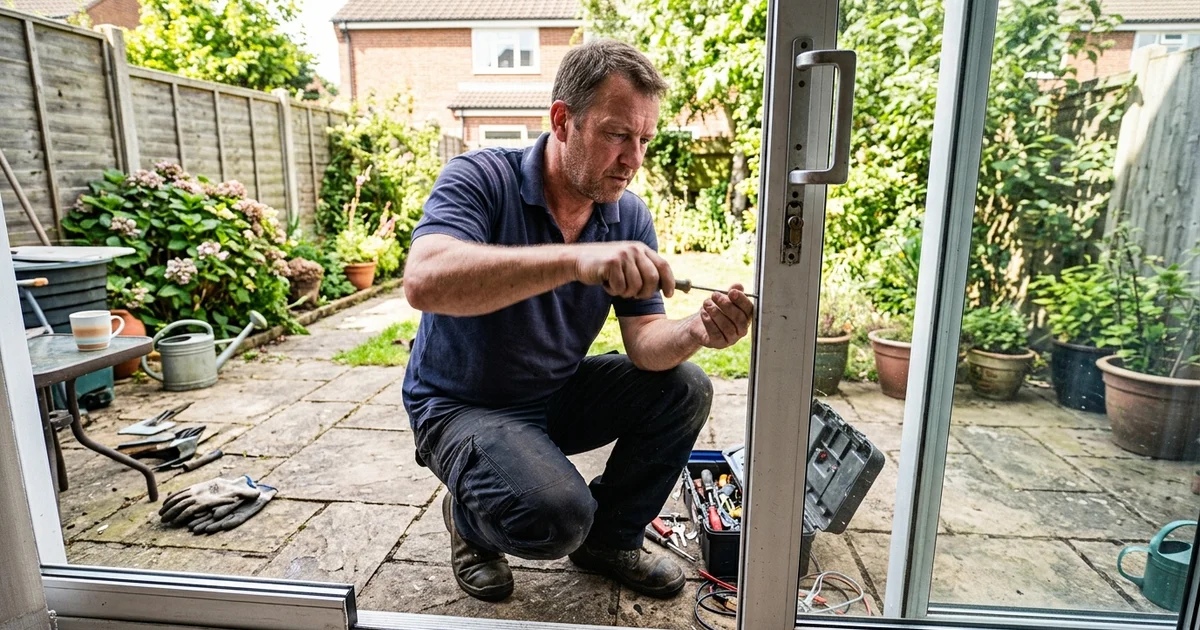
Patio and sliding doors are frequently the weakest link in a house, for three reasons: the locking hardware is often lighter than a front door’s, the door is at the back where nobody can see anyone working on it, and almost nobody thinks to check it.
They’re also very repairable. Most of the problems below are worn components or alignment, not doors that need replacing. Our UPVC and patio door lock repair service covers all of them. The same underlying causes show up on hinged doors too — see why a UPVC door handle goes stiff or hard to lift.
Common problems and what causes them
The lock won’t engage
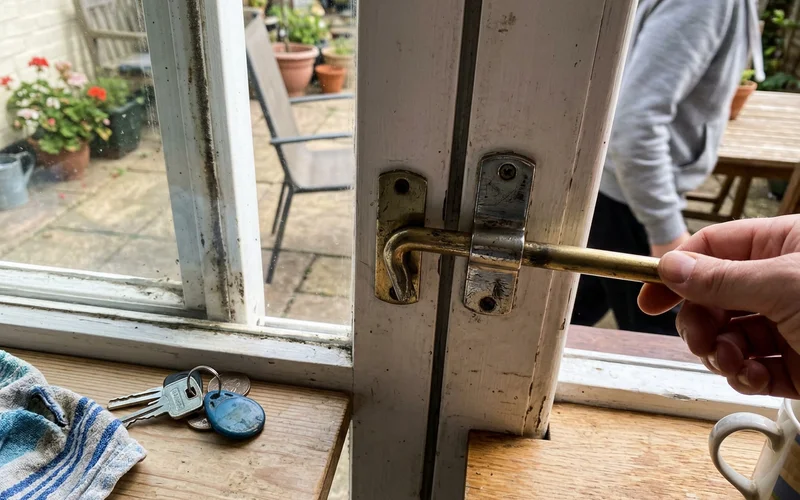
The handle moves but the door doesn’t feel locked, or the hook bolt won’t drop into the keep. Usually the bolt or the keep is worn, or the door has shifted so the two no longer line up.
Test: close the door and look at where the bolt meets the keep. If they’re visibly offset, it’s alignment.
The door is hard to slide
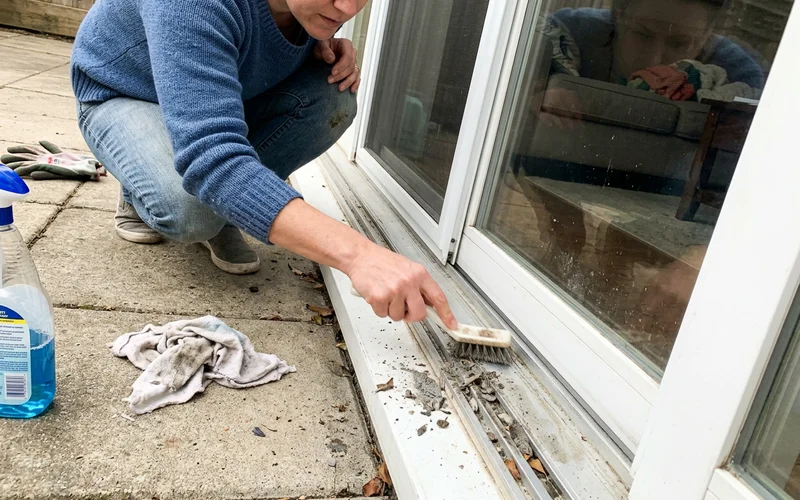
Grit in the track, or worn rollers. Sliding doors collect everything the garden produces: soil, leaves, sand, dog hair. That debris grinds the rollers and eventually the track itself.
Fix: clean the track thoroughly, then check the rollers. Worn rollers are replaceable and it’s not a big job.
The handle is loose or spins
Usually the spindle or the internal connection has worn. Straightforward to replace and worth doing promptly, because a spinning handle means the lock isn’t being driven properly even when you think it is.
The door lifts in its frame
If you can lift the door in the track by a centimetre or more, that’s a security problem. Sliding doors can be lifted clear of their track from outside if there’s enough play. Anti-lift devices and correctly adjusted rollers solve it.
Coastal corrosion
For homes near the water — Tramore, Dunmore East, Fenor, Annestown and the Copper Coast — salt air attacks the mechanism, the track and the fixings faster than inland. Patio doors get the worst of it because they usually face the weather.
Repair or replace?
| Situation | Usual answer |
|---|---|
| Worn bolt or keep | Replace the component |
| Alignment or dirty track | Adjust and clean |
| Worn rollers | Replace rollers |
| Loose or spinning handle | Replace the handle assembly |
| Mechanism badly corroded throughout | Replace the mechanism |
| Frame or glazing damaged | Wider job — glazier may be involved |
Replacing the whole door because the lock failed is very rarely necessary. Most patio doors outlive several sets of hardware.
Worth upgrading while you’re at it
Because patio doors are often the weakest entry point, a lock repair is a good moment to improve them:
- Better hook bolts that engage more securely into the keep.
- Additional locking points on taller doors.
- Anti-lift devices so the door can’t be lifted from its track.
- A key-operated lock rather than a simple catch, on doors that only have the latter.
Where the patio door has a euro cylinder, the same anti-snap upgrade that applies to a front door applies here too, and for the same reason.
Simple maintenance that prevents most of this
Twice a year: brush and vacuum the track, wipe the rollers, and apply a dry lubricant to the moving parts of the mechanism. Avoid oil, which turns garden dust into grinding paste.
Ten minutes, twice a year, prevents most of the calls we get about patio doors.