

The principle: reach in, don’t break in
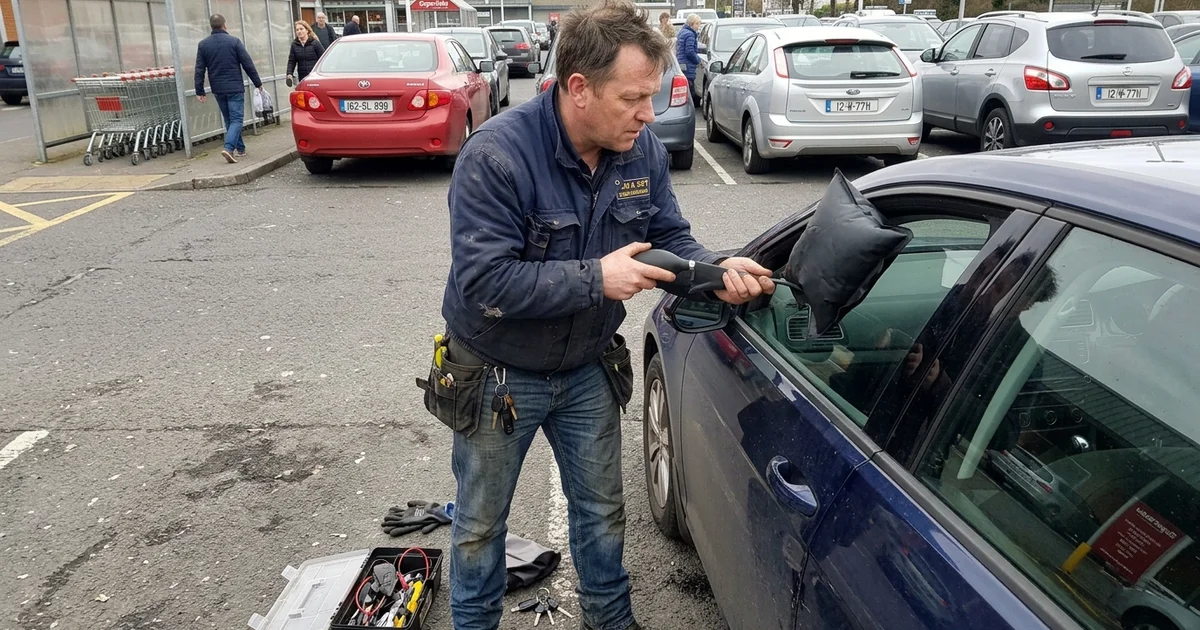
Opening a locked car properly has nothing to do with force. The goal is to create a small, controlled gap and reach through it to operate the same handle or button you’d use from the inside.
Everything an auto locksmith does is built around that idea, which is why a correctly performed opening leaves no trace at all: no marks on the paint, no damaged seal, no bent frame, and a door that closes exactly as it did before.
The tools, in plain English
The air wedge. A flat inflatable pad that slides into the top corner of the door frame, then inflates slowly to open a gap of a few millimetres. It spreads pressure across a wide area rather than concentrating it on one point, which is precisely why it doesn’t bend anything. A screwdriver in the same position would.
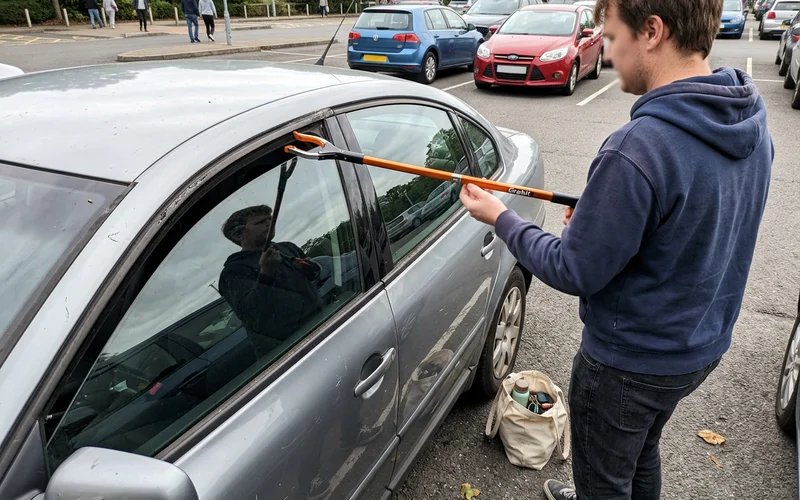
The reach tool. A long, slim rod, usually coated to avoid scratching, that goes through the gap. Depending on the car it operates the interior door handle, presses the electronic unlock button, or lifts a manual lock pin.
Protective sheets. Placed over the paint edge and the top of the door before anything else happens, so tools never touch bodywork.
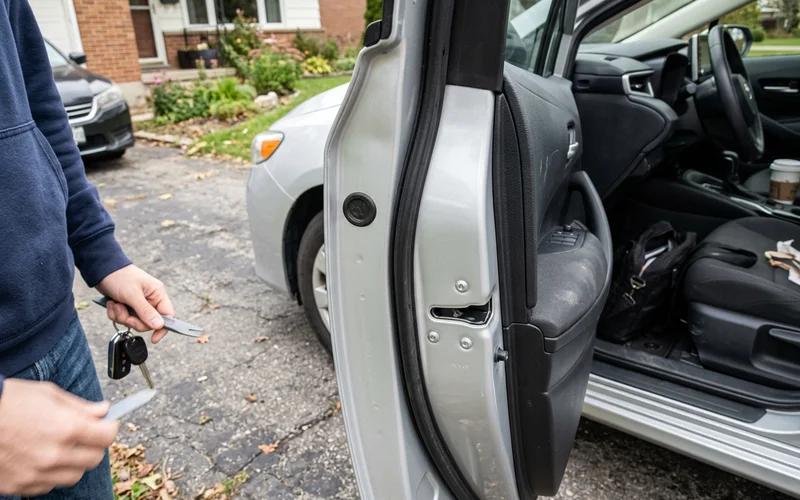
Lock decoding equipment. Where a key is lost rather than locked inside, the door lock can sometimes be read to determine the key pattern, allowing a blade to be cut.
Why it doesn’t damage the car
Three reasons.
Pressure is spread, not concentrated. An inflated wedge distributes force across its whole surface. Door frames flex slightly by design; what they don’t tolerate is a point load from a metal tool.
Nothing metal touches paint. Protective sheets go on first, and reach tools are coated.
The gap is small and brief. A few millimetres for a few minutes. The seal returns to shape and the door closes normally afterwards.
Compare that with the coat-hanger method the internet loves: bare metal dragged across a paint edge, no control over pressure, and a real chance of snagging the wiring loom or airbag cabling that runs inside modern door cards.
When a key has to be cut instead
Opening the car and providing a working key are two different jobs.
If your keys are locked inside, opening is the whole job. You retrieve them and drive away.
If your key is lost or broken, the car needs a new key. Depending on the vehicle, that can mean cutting a blade to the lock’s pattern, decoding it from the door lock or ignition, or — for some vehicles — manufacturer-level programming that only a dealer can do.
That’s why we ask for the make, model and year on the phone. It lets us tell you honestly what’s possible before travelling, rather than arriving and discovering it isn’t. Our guide on lost car key options covers the routes in more detail.
What you’ll be asked for
Expect an ownership check. Photo ID plus something linking you to the vehicle — insurance details, the registration document, or the vehicle in your name on an app. It takes a moment, and a locksmith who opens cars without asking is one who’d open yours for someone else on the same terms.
What “capability-neutral” means and why we say it
You’ll notice we describe our vehicle work carefully rather than promising every make and model. That’s deliberate.
Vehicle security varies enormously between manufacturers, and between model years within the same manufacturer. Claiming universal capability sounds better in an advert and produces wasted call-outs, unhappy customers and disputed fees in real life.
Instead we confirm the vehicle on the phone, tell you what we can do, and where a dealer is genuinely the right answer we say so before you’ve paid anything.