

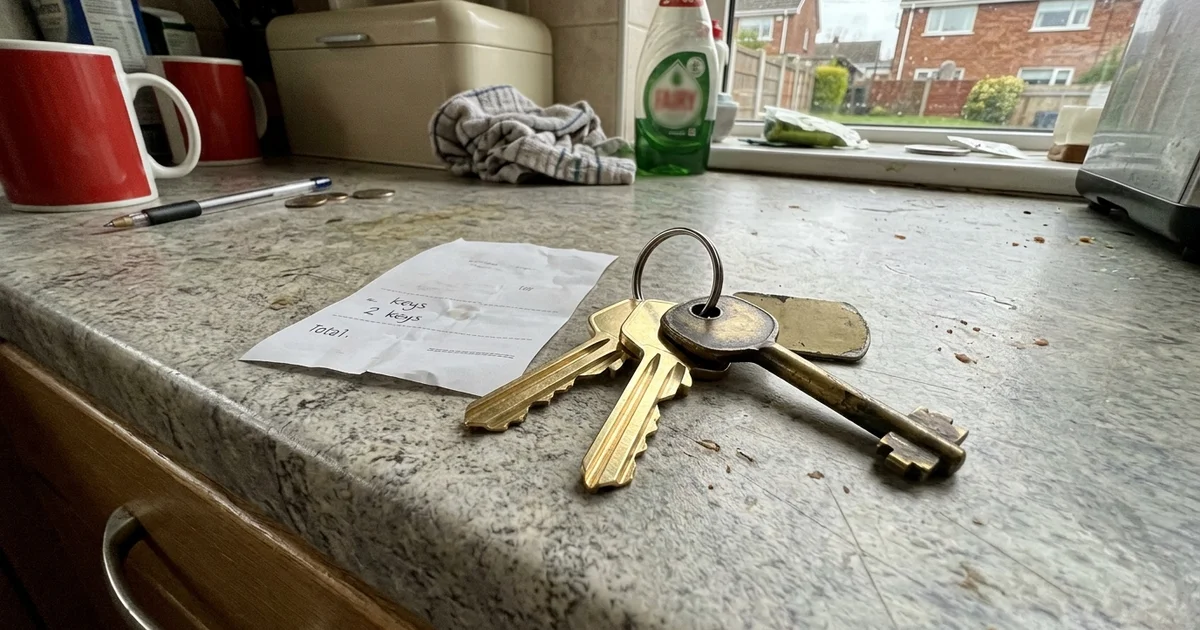
What to bring, or have ready
The original key is all that’s needed for most jobs. We’re mobile, so we come to your home or premises rather than you finding parking in town with your only key in your hand.
The key type helps us prepare. Ring and describe it:
- Flat brass key with a serrated edge — a cylinder key, for a euro cylinder or rim lock.
- Chunkier key with a solid shaft and a flag at the end — a mortice key, for lever locks in timber doors.
- Flat key with small round dimples rather than serrations — a dimple key, common on higher-security cylinders.
- A key marked “do not duplicate”, or one that came with a card — restricted, see below.
Identification for restricted keys or where the property is commercial.
Key types we cut

Cylinder keys, mortice keys, dimple keys, padlock and outbuilding keys, and vehicle blades for many makes and models — confirmed by make, model and year first, since vehicle capability varies.
Our full key cutting service covers homes and businesses across Waterford City and the surrounding towns.
Copying versus cutting to code
Worth understanding, because it explains why some copies never work properly.
Copying traces your existing key and reproduces it, including its wear. If your original has been in daily use for a decade, or is itself a copy of a copy, the new key starts inaccurate.
Cutting to code produces a key to the lock’s original specification. Better whenever your key is worn, and the only route when the original is lost or broken. Not every lock allows it, but where it does the difference in operation is immediately noticeable.
If your current key sticks or needs a wiggle, ask for a fresh cut to code rather than a copy. Otherwise you’re duplicating the fault.
How many spares, and where
Two beyond the ones in daily use is the sensible minimum.
One at home, in a fixed place you’d find in the dark.
One off-site — with a partner, a family member nearby, or a neighbour you trust.
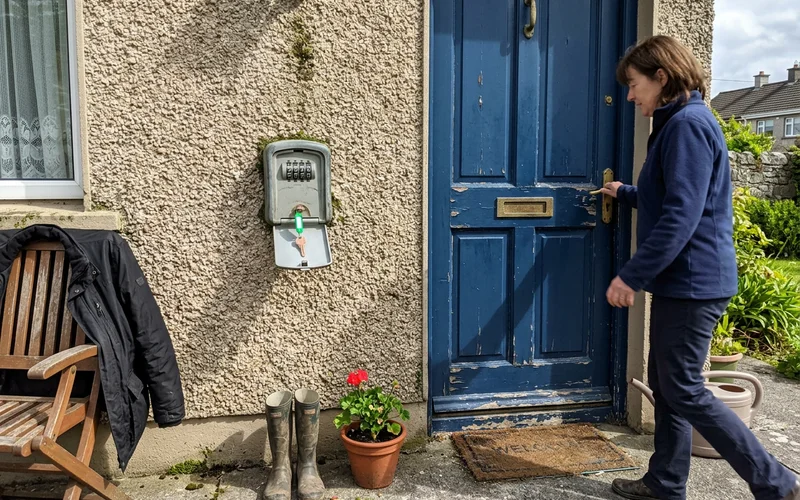
A coded key safe is the best option for holiday homes, rentals and anyone who regularly gives access to cleaners or trades. Mount it out of obvious sight, and change the code when someone no longer needs access.
Where not to hide a key: under the mat, in a plant pot, on the ledge above the door, or in a fake rock that looks exactly like a fake rock. Those are the first four places anyone checks, and they’ve been the first four places for decades.
Restricted keys
If your key is patent-protected, copies require the keyholder’s written authorisation and can only be cut by authorised suppliers. That’s deliberate: it’s what stops a tenant, contractor or former staff member quietly having a set made.
If you’d like that level of control on your own property, restricted keyways can be fitted as part of a lock change. Landlords and businesses in particular benefit, because it turns “how many keys exist?” from an unanswerable question into a list.
While we’re there
If a key has been sticking, snapping or needing force, mention it. That’s usually a lock problem rather than a key problem, and it’s better diagnosed before it strands you outside — see our broken key extraction service for what happens when it goes the other way.